Driving strategic initiatives
Architecting a modern enterprise at Zonar

2018-2023 · Zonar · Head of UX
When an organization reaches a critical inflection point, incremental changes are no longer enough.
You have to fundamentally reinvent how you work.
During a major strategic overhaul at Zonar, there was sweeping consensus that the old, fragmented ways of operating were creating bottlenecks and stifling our growth.
We all agreed: what got us here won't get us there.
We needed to shed our outdated infrastructure and siloed programs to build a cohesive, modern system of care worthy of the communities we served.
Because this was a massive cross-functional effort involving the hands, hearts, and minds of everyone in the company, it required a highly intentional blueprint.
HIGHLIGHTS
The modernized software platform was significantly more flexible and adaptable to future customer needs.
The company stopped guessing what features to build and ensured they delivered solutions that customers actually valued.
Re-architecting the core customer workflows reduced user confusion, driving a targeted 10% drop in customer support calls.
A shared design system eliminated internal debates and repetitive tasks, drastically reducing wasted effort and improving overall product quality.
Staff were freed from tedious, low-value work, allowing them to dedicate their energy to high-value strategic problem-solving.
PHASE 1 : STEER INTO THE SKID
ESTABLISH COLLABORATIVE GOVERNANCE
You can't execute a visionary strategic plan if your Engineering, Product, and Marketing departments are operating in silos.
Effective communication and coordination are the bedrock of any transformation.
Before we tackled the operational roadblocks, we had to agree on how we would navigate conflict and make decisions together.

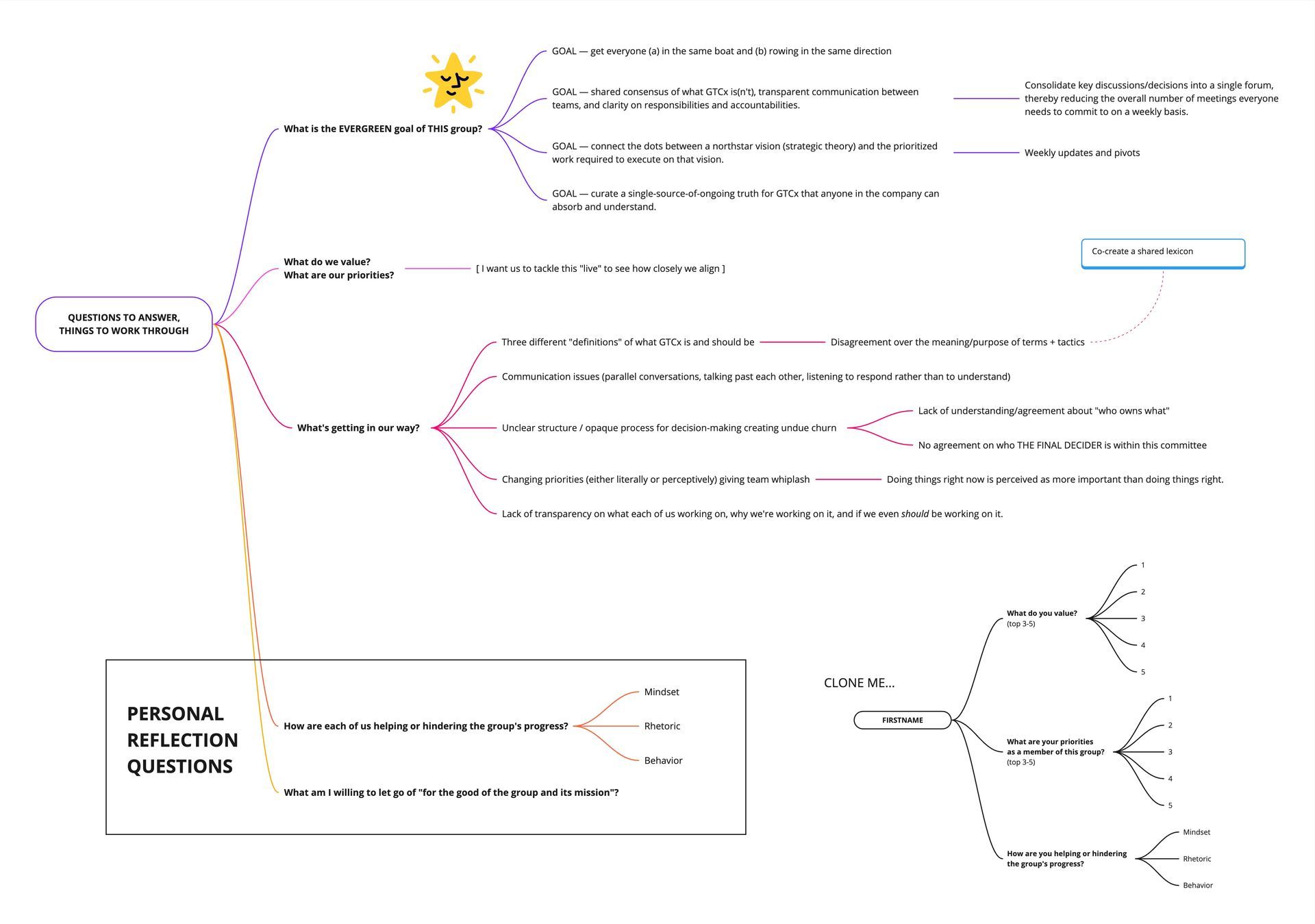
Click image to enlarge
So I established and led a cross-functional steering committee comprised of key department leads and subject-matter experts.
Rather than diving straight into roadmaps or resource allocation, we opened our first meeting with an alignment exercise.
We collectively defined our "evergreen goals," clarified our shared priorities, and candidly discussed the internal bottlenecks that might get in our way.
This established a transparent, psychologically safe governance model that set the tone for how the entire enterprise would collaborate over the coming months.
Even with all the big egos and territorialism at play, simply encouraging everyone to regularly reflect on their own behavior, rhetoric, and mindset was a powerful catalyst for meaningful change — in a word:
compassion.
PHASE 2 : STOP GUESSING, START LEARNING
PIVOT TO EVIDENCE-BASED STRATEGY
Our biggest operational liability was that we were relying too heavily on internal assumptions and personal preference from the C-Suite.
We were asking, "What feature can we build to sell next?" instead of asking, "What will deliver the most tangible value to our customers?"
As a result, we were burning millions of dollars on the wrong investments.
Whoever understands the customer best, wins.
Mike Gospe
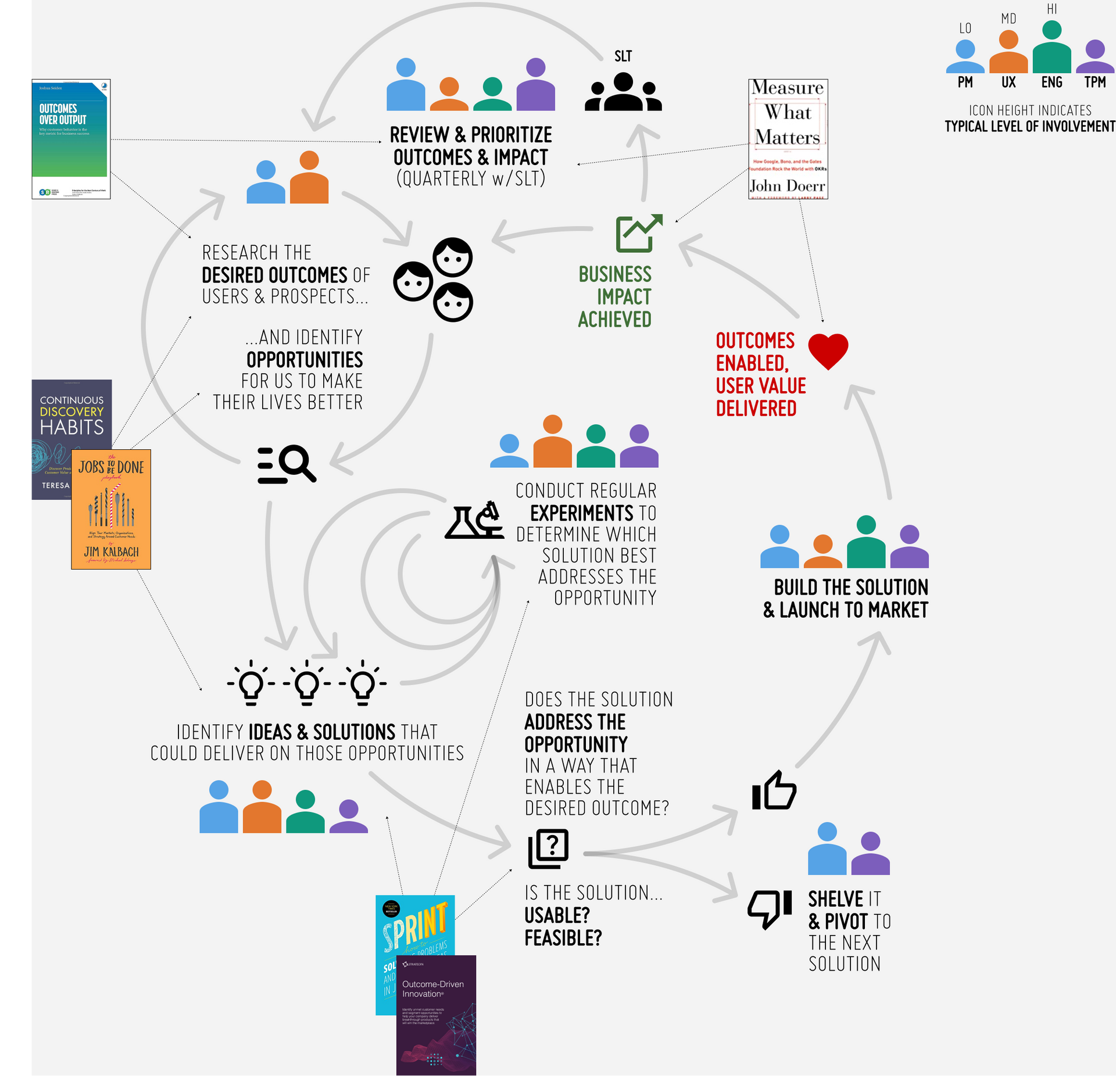
By integrating our learnings from the "UX book tour", I was able to champion and roll out a repeatable workflow methodology that shifted our collective focus from "what did we build this week" to "what did we learn this week"?
By aligning Product, Engineering, and UX around validated customer needs rather than just feature checklists, we stopped guessing.
This evidence-based approach ensured that every budget dollar allocated and every line of code written solved a core user problem, guaranteeing a strong product-market fit before we committed heavy resources.
PHASE 3 : NO DEAD-ENDS
ARCHITECT A UNIFIED CUSTOMER EXPERIENCE
One of the most daunting challenges we faced was a highly fragmented digital ecosystem.
Our disparate, product-centric silos created severe navigational friction for our users, which in turn drove up our operational costs.
We had to restructure the entire platform so that customers experienced a single, unified organizational brand.
I partnered with Marketing and Product leadership to design a unified, flexible Software-as-a-Service (SaaS) platform architecture, breaking down internal silos in favor of a cohesive and intuitive customer experience.
For a deep-dive into the thinking behind helping users navigate complexity more intuitively...
By designing a "no dead-ends" system with contextual micro-help, we didn't just make the software look better—we targeted a highly specific business outcome:
a 10% year-over-year reduction in customer support calls.
PHASE 4 : DESIGN ONCE, USE EVERYWHERE
Scale Through Standardized Infrastructure
No strategic initiative will endure if the staff doing the heavy lifting aren't bought in, or if the new processes lead to burnout.
We needed a scalable, standardized operational blueprint and kit-of-parts, so our teams didn't have to reinvent the wheel when faced with new requests or challenges.
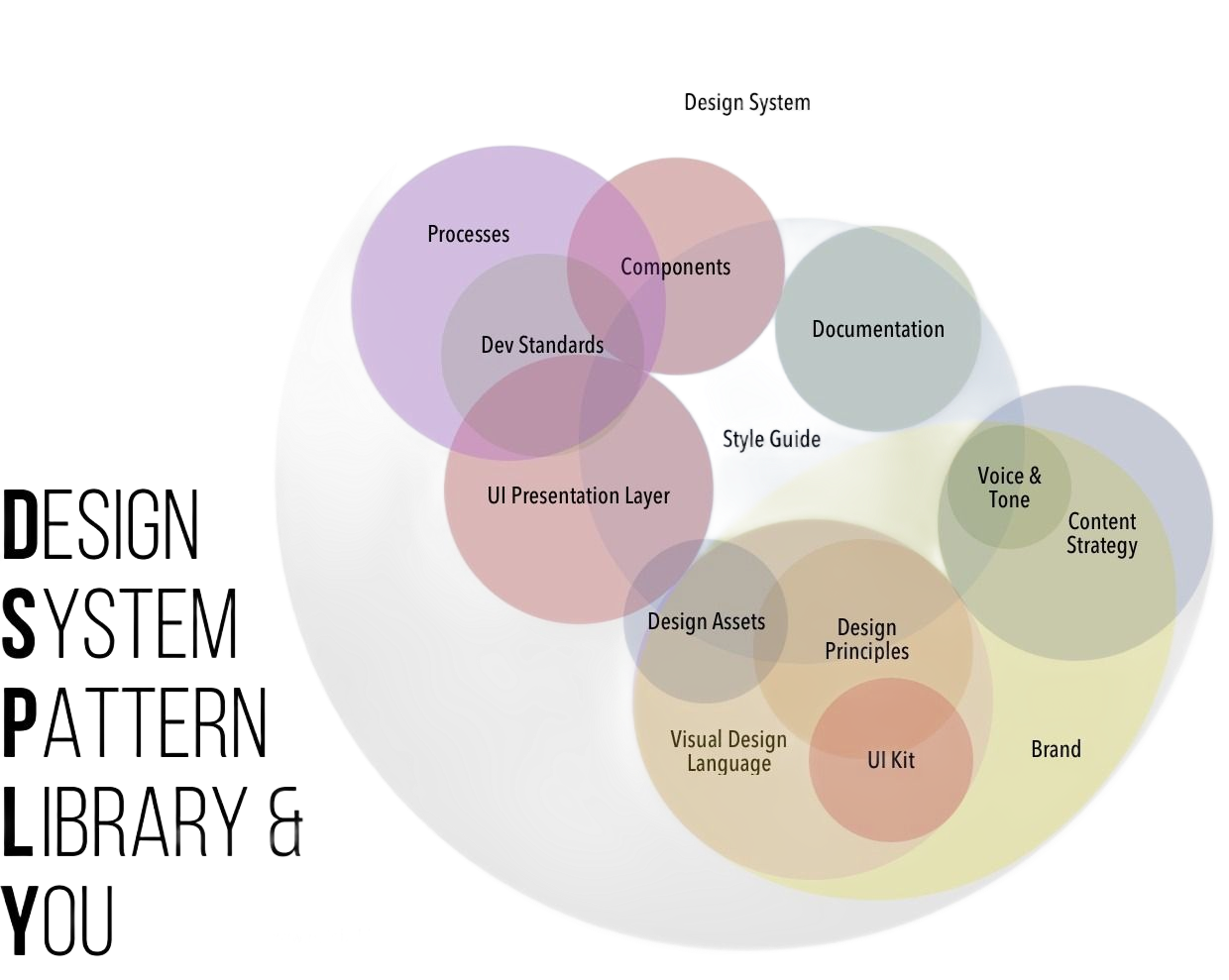
I co-led the DSPLY initiative with my counterpart from Engineering to establish the company's first comprehensive Design System and Pattern Library.
This modular, atomic infrastructure drastically reduced organizational rework and "rogue" development.
By standardizing our tools, we eliminated frustrating administrative debates and freed our staff from repetitive, low-value tasks.
This empowered our teams to spend their energy on high-value strategic problem-solving, accelerating our time-to-market while ensuring consistent product quality.
Modernizing any aspects of a highly complex enterprise is never just a technology problem; it is a profoundly human challenge.
By dismantling deeply entrenched silos, insisting on evidence over internal assumptions, and deploying a scalable infrastructure, we did more than just future-proof a SaaS platform. We rewired the organization's DNA to protect our staff from burnout and align every financial investment directly with measurable customer value.
This is the ultimate mandate of an organizational architect: to design a sustainable operational system where radical empathy meets rigorous accountability, ensuring the enterprise has the resilience, trust, and structural clarity to thrive in its next era of growth.